
Waterproof & Water-Resistant Systems
Explore water-protective fabrics, coatings and suitable closures to address rain, splashes and wet environments. Performance depends on the complete product construction.
Innovation is more than a new feature. We explore materials, construction and thoughtful design to address real operational challenges—helping equipment perform where it matters.
Equipment is only useful when it works for the person relying on it. At Hypergear Industrial Innovations, we look at the demands of each application: exposure to water and weather, movement, access to essentials, organization, durability and ease of use.
By combining material choices with functional product design, we seek to create technical bags, protective rainwear and wearable solutions that respond to real conditions rather than design trends alone.
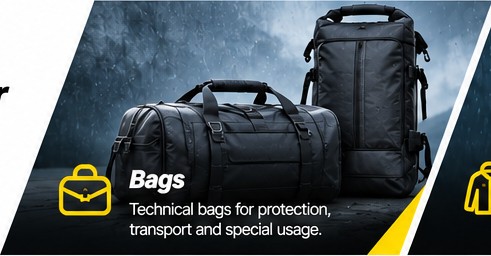
Material innovation starts with selecting the right balance of protection, weight, comfort and longevity for the use case. The features below are design considerations, not universal specifications of every Hypergear product.
Explore water-protective fabrics, coatings and suitable closures to address rain, splashes and wet environments. Performance depends on the complete product construction.
Consider seam construction, sealing approaches, access points and closure methods, where appropriate, as part of a complete protection strategy.
Explore material resilience and reinforcement for handling, repeated use, loads and challenging working environments.
Balance freedom of movement, carry comfort, packability and weight with the protective demands of the application.
Consider reflective details, high-visibility materials and clear identification for relevant field, emergency or operational contexts.
Evaluate specialized compartments, attachment systems, ventilation and other functional requirements according to the project brief.
Waterproof ratings, fire resistance, chemical resistance, certifications and other regulated performance claims require product-specific specifications and suitable testing evidence.
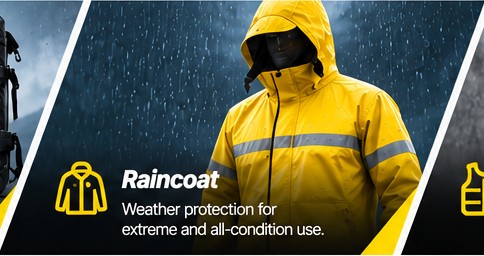
We approach functional design by considering how a product will actually be used in the field—not just how it looks in a catalogue.
A good solution brings together material, construction and usability. Depending on the project, design exploration can include protective storage, fit and adjustment, rapid-access pockets, adaptable mounting methods or convenient maintenance.
Special-function equipment is most effective when the entire product is considered as a system—from materials and component choices to how people interact with it each day.
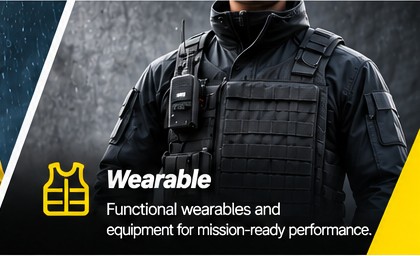
A practical framework for exploring tailored products with B2B and B2G stakeholders.
Discuss users, working environment, pain points, carrying needs and intended protection level.
Explore relevant material systems, functional ideas, configurations and feasibility.
Review concepts and samples, where appropriate, against user feedback and agreed performance needs.
Discuss suitable specifications, sourcing, quality expectations and project delivery considerations.
Development stages, prototype availability, performance testing and supply arrangements are subject to each project and agreed scope.
Functional carrying, weather protection and equipment access for site and field work.
Portable organization, weather-resistant storage and practical deployment-oriented design considerations.
Material and design choices for moisture-exposed activities, transport and protective carrying applications.
These are examples of potential application areas; product capabilities and suitability should be evaluated against specific requirements.
Tell us about the problem you want to solve, the environment your users work in and the performance you need. Let’s explore a purpose-driven technical gear solution.
Discuss an Innovation Project ↗